
APARC Leadership
APARC leadership is composed of experts from around the world who dedicate their time to APARC’s international activities. These include the APARC Scientific Steering Group (SSG), who serve to guide APARC’s scientific focus, targeted activities and their leaders, the WCRP Joint Science Committee liaisons, and WCRP Secretariat officer, as well as the the International Project Office.
Current members of the APARC Scientific Steering Group (SSG) are:
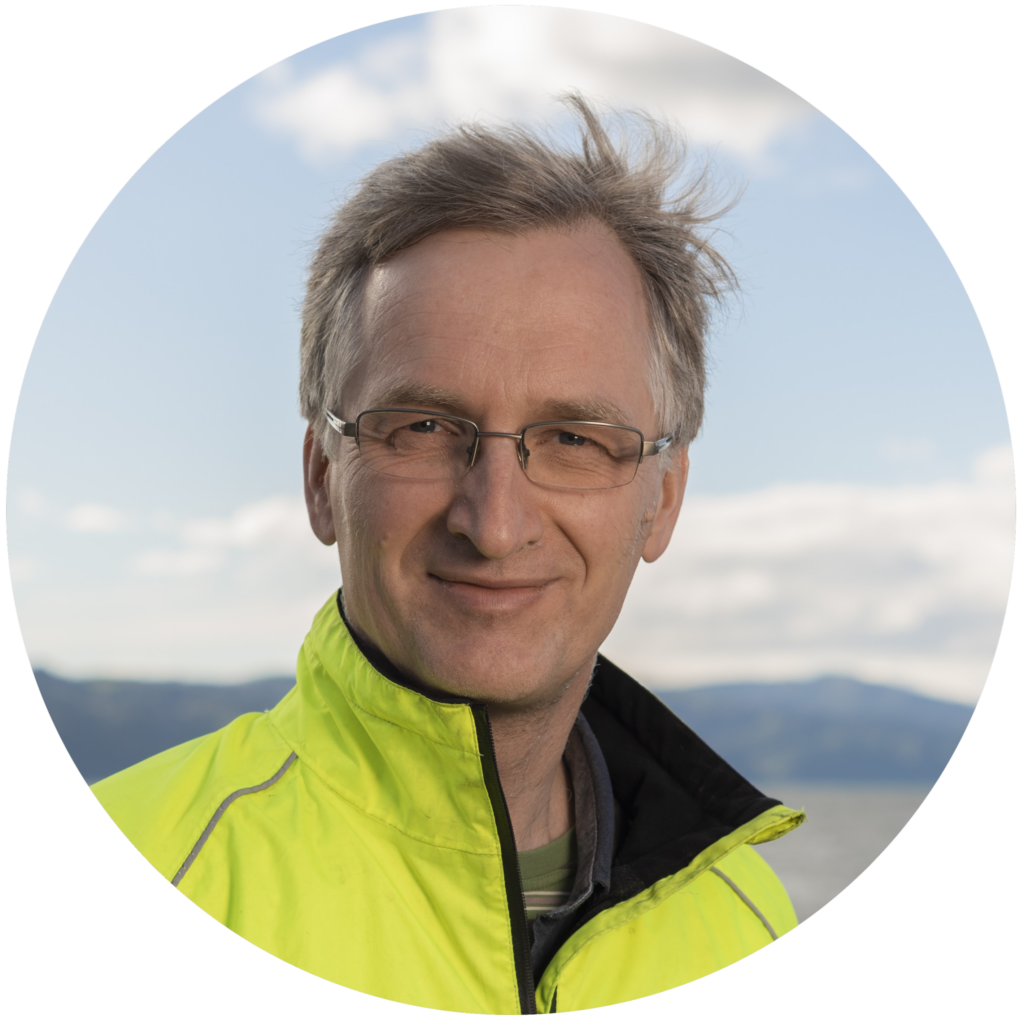
Olaf Morgenstern
DWD Offenbach, Germany
Biography
Olaf is interested in all aspects of composition-climate interactions. He was a lead developer of the UK Chemistry and Aerosols (UKCA) chemistry-climate model from its inception in 2003. After moving to NIWA in 2008, he has widened his research to cover various aspects of climate, in particular attributing global- and regional scale climate change to anthropogenic and other drivers, and has published extensively on tropospheric composition and climate trends. He has led NIWA’s involvements in the Chemistry-Climate Modelling Initiative and the Aerosol and Chemistry Model Intercomparison Project (AerChemMIP). The latter has informed the 6th Assessment Report of IPCC which he is also a Lead Author of. He is Science Leader Earth System Modelling for the Deep South National Science Challenge, has led several projects for the Deep South NSC, and is presently co-leading the “Modelling Clouds and Aerosols” project.
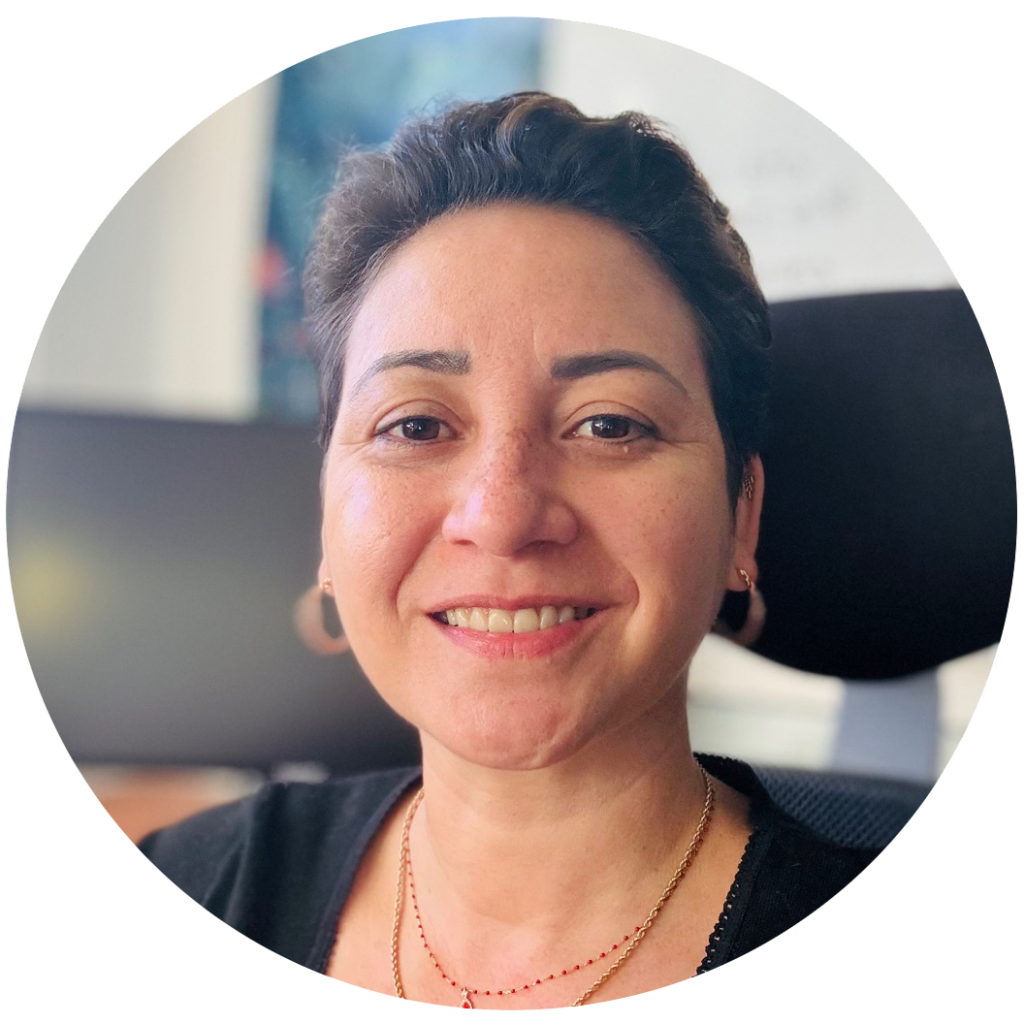
Stephanie Evan
OSU-Réunion, France
Biography
Stephanie Evan is affiliated with the Observatoire des Sciences de l’Univers de La Réunion (OSU-Réunion), UAR3365, an atmospheric observatory and research facility on La Réunion jointly operated by CNRS (French National Centre for Scientific Research), Météo-France, the University of La Réunion, and IRD. Stephanie
has worked extensively on APARC related topics
and brings expertise in both modeling and in situ
observations.

Paul Kushner
University of Toronto, Canada
Biography
Karen is a Program leader and Senior Scientist for Climate and Climate Change at NOAA/ESRL. Her expertise is in interpretation of stratospheric constituent, aerosol, and temperature data. She is an author of 111 peer-reviewed journal publications. She co-chairs the SPARCs upper troposphere and stratosphere Water Vapor Assessment (WAVAS-II), served as lead author in the first SPARC water vapor assessment and participated in SPARC ozone trends and temperature activities. She is co-author for WMO/UNEP Scientific Assessments of Ozone Depletion; a reviewer and contributing author for IPCC, and a lead author for a GRUAN Network Expansion report.
Biography
Olaf is interested in all aspects of composition-climate interactions. He was a lead developer of the UK Chemistry and Aerosols (UKCA) chemistry-climate model from its inception in 2003. After moving to NIWA in 2008, he has widened his research to cover various aspects of climate, in particular attributing global- and regional scale climate change to anthropogenic and other drivers, and has published extensively on tropospheric composition and climate trends. He has led NIWA’s involvements in the Chemistry-Climate Modelling Initiative and the Aerosol and Chemistry Model Intercomparison Project (AerChemMIP). The latter has informed the 6th Assessment Report of IPCC which he is also a Lead Author of. He is Science Leader Earth System Modelling for the Deep South National Science Challenge, has led several projects for the Deep South NSC, and is presently co-leading the “Modelling Clouds and Aerosols” project.
Biography
Stephanie is a CNRS researcher affiliated with the Observatoire des Sciences de l’Univers de La Réunion (OSU-Réunion, UAR3365), a multidisciplinary observatory based on La Réunion Island in the Indian Ocean.
Her research focuses on the composition and dynamics of the tropical upper troposphere and lower stratosphere (UTLS), with particular emphasis on ozone, water vapor, and aerosols. She studies how small-scale processes influence UTLS composition and dynamics, including the role of deep convection and cirrus microphysics in controlling ozone and water vapor in the tropical tropopause layer, as well as the generation of gravity waves that contribute to forcing of the Quasi-Biennial Oscillation.
She leads and coordinates long-term balloon-borne observations of ozone, water vapor, and aerosols in the tropics through international networks including SHADOZ, NDACC, GRUAN, and B2SAP. Her work combines in situ observations, satellite measurements, and numerical modelling, including mesoscale and Lagrangian approaches, to improve understanding of the under-resolved processes controlling stratospheric composition and their implications for climate.
She is a member of the International Ozone Commission (IO3C) and contributes to international coordination and assessments related to atmospheric composition and climate.
Biography
Paul (Ph.D., Physics, Toronto, 1995) is a Professor and the Chair of Physics in the Department of Physics at the University of Toronto. He is delighted and honoured to be reintroduced to the APARC community, following his work with SPARC DynVar in the mid-2000s.
Paul’s research broadly covers theoretical and computational atmospheric dynamics and general circulation, development and application of earth-system models for simulation of earth’s climate, analysis of cold-climate processes, and most recently, applications in the areas of short-lived climate forcers and the impacts of climate change. He has a longstanding interest in development and novel application of Earth System Models, and serves several leadership and steering committee roles in this area. He is looking forward to learning about APARC’s strategic direction and exploring APARC’s role in work on annual-to-decadal earth-system change, in the context of the WCRP EPESC LHA (for which Paul is WG1 co-chair and SSG member).
SSG Members 2026
Adam Bourassa
University of Saskatchewan, Canada
Suvarna Fadnavis
Indian Institute of Tropical Meteorology, India
Qiang Fu
University of Washington, USA
Sophie Godin-Beekmann
Institut Pierre-Simon Laplace, France
Martin Jucker
University of New South Wales, Sydney, Australia
Victor Ongoma
Mohammed VI Polytechnic University, Morocco
Marisol Osman
Centro de Investigaciones del Mar y la Atmósfera, Argentina
Viktoria Sofieva
Finnish Meteorological Institute, Finland
Marc von Hobe
Forschungszentrum Jülich, Germany
Shingo Watanabe
Japan Agency for Marine Earth Science and Technology, Japan
Jonathon Wright
Tsinghua University, Beijing, China
Yang Zhang
Nanjing University, China
Contact at WCRP Secretariat
Hindumathi Palanisamy (Scientific Officer WCRP)
Activity Leaders
For a full list of activity leaders see the Activities pages.